The Importance of VPN Server Locations
Virtual Private Networks, or VPNs, are widely used tools designed to enhance online privacy, protect data, and provide greater control over how internet connections are routed. While many users focus on features such as encryption standards or pricing, the location of VPN servers plays a central role in determining how effective a VPN will be in practice. Server location directly influences connection speed, data jurisdiction, and the ability to access geographically restricted content. Understanding how these factors interact can help users make more informed decisions and improve their overall online experience.
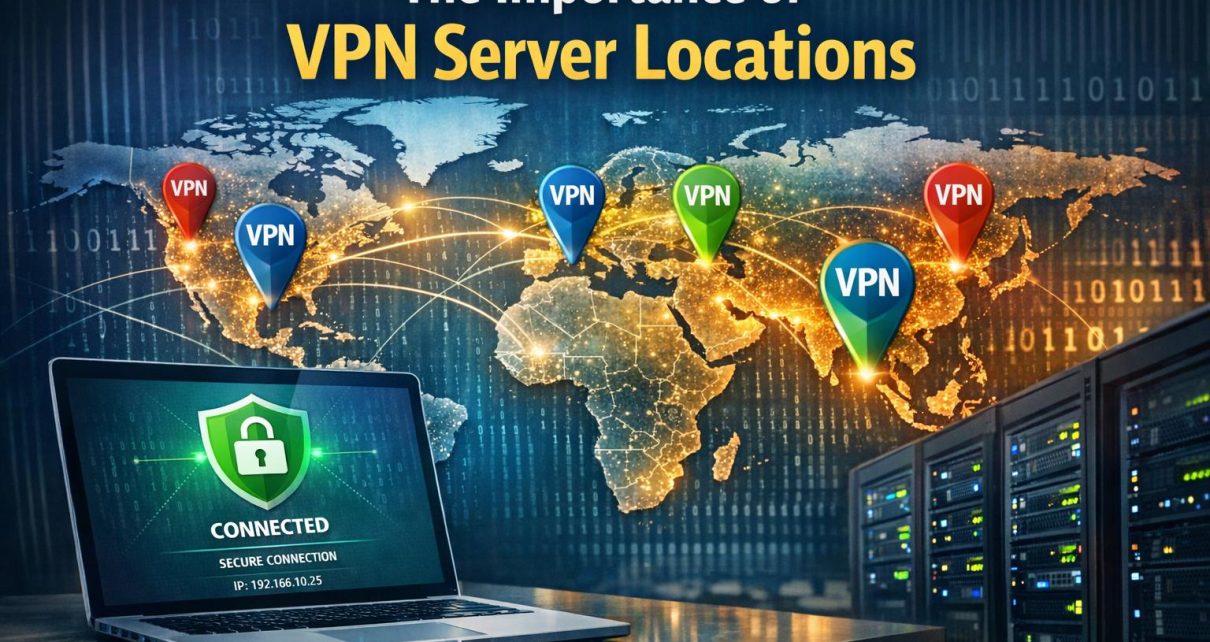
VPN providers typically offer a network of servers distributed across multiple countries and regions. Each of these servers acts as an intermediary between the user and the internet, meaning that all traffic is routed through that location. As a result, the selected server effectively determines the user’s visible online location, which has both technical and legal implications.
Impact on Connection Speed
Connection speed is one of the most noticeable factors affected by VPN server location. When a user connects to a VPN, their data must travel from their device to the server and then onward to the destination website or service. The greater the physical distance between the user and the server, the longer this process typically takes. This can result in increased latency, slower download speeds, and reduced responsiveness, particularly for activities such as streaming or online gaming.
However, proximity is not the only factor that determines speed. Server load is equally important. A nearby server that is heavily congested can perform worse than a more distant server with fewer users. High-quality VPN providers attempt to balance this by distributing traffic efficiently and offering real-time information about server usage.
Infrastructure quality also contributes to performance. Servers located in regions with advanced networking infrastructure tend to offer better reliability and throughput. In contrast, servers in areas with less developed infrastructure may experience instability or slower speeds, even if they are geographically closer.
In practice, users often benefit from testing multiple server locations rather than relying solely on proximity. Many VPN applications include automatic selection features that choose a server based on performance metrics. While these tools can be helpful, manual selection can sometimes yield better results depending on specific use cases.
Implications for Online Privacy
The jurisdiction in which a VPN server is located has significant implications for data privacy. Different countries enforce varying regulations regarding data retention, surveillance, and cooperation with international intelligence alliances. When traffic passes through a VPN server, it becomes subject to the legal framework of that jurisdiction.
For example, some countries require service providers to retain user data for specified periods, while others have stricter protections that limit data collection. Choosing a server in a country known for strong privacy protections can reduce the likelihood of data being stored or accessed by authorities. Conversely, servers located in regions with extensive surveillance practices may pose additional risks.
It is also important to consider how the VPN provider operates within these jurisdictions. A provider’s no-logs policy is often cited as a safeguard, but its effectiveness depends on whether it has been independently verified and how it aligns with local laws. Even in privacy-friendly countries, unclear policies or poor implementation can undermine user protection.
Another aspect to consider is cross-border data sharing agreements. Some nations participate in intelligence-sharing alliances, which can complicate assumptions about privacy. While using a VPN server does not automatically expose user data, understanding the broader legal environment helps in assessing potential risks.
Access to Geo-Restricted Content
One of the most common reasons users choose specific VPN server locations is to access content that is restricted based on geographic location. Streaming platforms, news websites, and other online services often limit availability according to licensing agreements or regulatory requirements. By connecting to a server in a different country, users can make it appear as though they are browsing from that region.
This capability allows access to region-specific libraries of streaming services or websites that may be unavailable in the user’s home country. For instance, a user might connect to a server in another region to view content not offered locally. While this functionality is widely used, it is important to recognize that terms of service for many platforms may restrict this type of access.
Additionally, not all VPN servers are equally effective for bypassing restrictions. Some content providers actively detect and block known VPN IP addresses. As a result, VPN providers may designate certain servers as optimized for streaming or frequently rotate IP addresses to maintain accessibility.
Performance also plays a role in this context. Accessing high-quality video content requires sufficient bandwidth and low latency. Choosing a distant server may enable access but degrade the viewing experience. Therefore, users often need to balance location choice with performance considerations.
Security Considerations Beyond Location
While server location is a key factor, it works in conjunction with other security elements. Encryption protocols, authentication methods, and server configuration all contribute to the overall effectiveness of a VPN. A well-located server with outdated security measures may provide less protection than a slightly less optimal location with modern standards.
Some VPN providers operate virtual servers, where the server’s physical hardware is located in one country but configured to appear as if it is in another. This can expand location options but may complicate assumptions about jurisdiction. Transparency from the provider regarding how these servers are implemented is important for users who prioritize legal clarity.
Dedicated IP options and specialized servers, such as those configured for specific applications, can further influence how location impacts performance and usability. These variations highlight that server location should be evaluated alongside broader service features.
Conclusion
The choice of VPN server location has a direct and measurable impact on speed, privacy, and content accessibility. Selecting a nearby server can improve performance, but factors such as server load and infrastructure must also be considered. At the same time, the legal environment of the server’s location influences how user data is handled and protected.
For users seeking access to geo-restricted content, server location serves as a practical tool, although it requires attention to both performance and compliance with service terms. Ultimately, the most effective use of a VPN involves understanding how these elements interact rather than relying on a single factor.
By taking into account distance, jurisdiction, and intended use, individuals can make more informed decisions when choosing a VPN server. This approach helps maximize both security and usability while adapting to the varied demands of modern internet use.