
The Benefits of VPNs for Remote Work
The growth of remote work has reshaped modern business operations by enabling employees to perform their roles from a wide range of locations. While this shift offers greater flexibility and organizational resilience, it also introduces new concerns related to data security, system access, and network reliability. A Virtual Private Network (VPN) has become a central tool in addressing these concerns. By creating a secure and controlled connection between users and corporate systems, VPNs help organizations maintain operational standards while accommodating distributed teams.
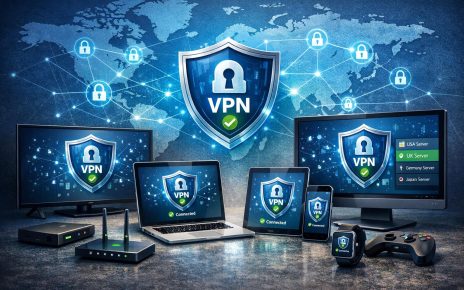
At a fundamental level, a VPN establishes an encrypted tunnel between a user’s device and a remote server. This secure tunnel ensures that data transmitted across public or private networks remains protected from interception. As remote work continues to expand across industries, the role of VPNs has evolved from an optional security tool into a necessary component of digital infrastructure.
Enhanced Security and Privacy
Security remains one of the most critical considerations in remote work environments. Employees frequently connect to company systems using home networks or public Wi-Fi, both of which may lack adequate protection. A VPN mitigates these risks by encrypting all outgoing and incoming data. This encryption makes it significantly more difficult for cybercriminals to intercept sensitive information such as login credentials, financial data, or internal communications.
In addition to encryption, VPNs provide an added layer of privacy by masking the user’s IP address. This prevents external parties from easily identifying a user’s location or tracking browsing behavior. The combination of encryption and IP masking reduces exposure to threats such as man-in-the-middle attacks, phishing attempts, and unauthorized surveillance.
For organizations handling regulated or sensitive data, such as financial records or customer information, VPN usage supports compliance with data protection standards. By ensuring that communications are secure regardless of where employees are located, companies can maintain consistent security policies across their workforce.
Access to Restricted Resources
Remote employees often require access to internal systems, databases, or region-specific services that are not publicly available. VPNs facilitate this access by allowing users to connect to a network as though they were physically present in a specific location, such as a corporate office. This capability is particularly important for organizations that maintain internal tools behind firewalls or restrict access based on geographic criteria.
Through VPN connections, employees can securely access geo-restricted content and company resources without compromising security protocols. For example, a worker located abroad can connect to a server in their home country to access applications that are limited to that region. This ensures continuity in workflows and minimizes disruptions caused by location-based restrictions.
VPNs also simplify access management for IT departments. Instead of exposing internal systems directly to the internet, organizations can require all remote connections to pass through a VPN. This centralized approach allows for better monitoring, authentication control, and logging of access activity. For more information on how VPNs function in different scenarios, the following resource provides a general overview.
Maintaining Consistent Performance
Network performance plays a key role in remote productivity. Activities such as video conferencing, cloud-based collaboration, and real-time data processing require stable and reliable internet connections. In some cases, internet service providers may manage network traffic by throttling bandwidth based on usage patterns, which can negatively affect work performance.
A VPN can help reduce the likelihood of such throttling by obscuring the type of data being transmitted. Since the ISP cannot easily determine the nature of encrypted traffic, it becomes more difficult to selectively slow down specific activities such as streaming or large data transfers. This can result in a more consistent connection, particularly during high-demand periods.
However, it is important to recognize that VPNs can introduce some latency due to the additional step of routing data through a secure server. The impact on performance depends on factors such as server distance, server load, and the quality of the VPN service. Organizations typically address this by selecting high-performance VPN providers and strategically locating servers to minimize delays.
The Cost-Effectiveness of VPN Solutions
From a financial perspective, VPNs offer a practical balance between cost and benefit. While premium VPN services require subscription fees, these costs are generally modest compared to the potential financial impact of a data breach or security incident. A single breach can result in regulatory fines, reputational damage, and operational disruption, making preventive measures a cost-efficient investment.
VPNs also reduce the need for more complex and expensive infrastructure. Instead of building highly specialized remote access systems, organizations can deploy VPN solutions that integrate with existing networks. This simplifies implementation and reduces maintenance costs while still providing a high level of security.
For smaller businesses or teams with limited resources, VPNs present an accessible entry point to improving cybersecurity. Even basic VPN configurations can significantly enhance protection compared to relying solely on standard internet connections. As organizations scale, VPN solutions can be expanded or customized to meet evolving requirements.
Operational and Organizational Advantages
Beyond security and cost considerations, VPNs contribute to broader operational efficiency. They enable organizations to standardize access procedures for remote employees, ensuring that all users connect through a controlled and monitored environment. This consistency simplifies IT management and reduces the likelihood of misconfigurations or unauthorized access.
VPNs also support workforce mobility. Employees can transition between locations without needing to adapt to different network conditions or access methods. Whether working from home, traveling, or operating from a temporary site, users experience a consistent connection to company systems.
Additionally, VPN usage can strengthen internal trust in digital processes. When employees know that their connections are secured and monitored appropriately, they are more likely to adopt remote tools and platforms confidently. This contributes to smoother collaboration and more reliable communication across distributed teams.
Conclusion
VPNs play a central role in enabling secure and efficient remote work environments. By providing encrypted connections, protecting user identity, and enabling access to restricted systems, they address many of the core challenges associated with distributed work. While they are not a complete solution to all cybersecurity concerns, they form a critical component of a broader strategy.
As remote work continues to be integrated into standard business practices, the importance of reliable and secure connectivity will remain high. VPNs offer a practical, scalable, and cost-effective means of meeting these demands while supporting both organizational goals and individual productivity.