Understanding VPN and Its Role in Online Banking
In today’s digital environment, financial transactions increasingly take place over the internet, making online banking security a central concern for individuals and institutions alike. One widely used tool to enhance security and privacy is a Virtual Private Network (VPN). A VPN works by encrypting internet traffic and routing it through secure servers, which reduces the likelihood of data interception. While VPNs are not a complete security solution on their own, they play a meaningful role in strengthening the protection of sensitive financial information during online banking sessions.
Online banking involves transmitting confidential data such as login credentials, account numbers, and sometimes personally identifiable information. These data points can be vulnerable if accessed through unsecured networks, especially public Wi-Fi. A VPN reduces these risks by creating a secure communication channel, which helps shield user activity from unauthorized observation.
How VPN Enhances Security for Online Banking
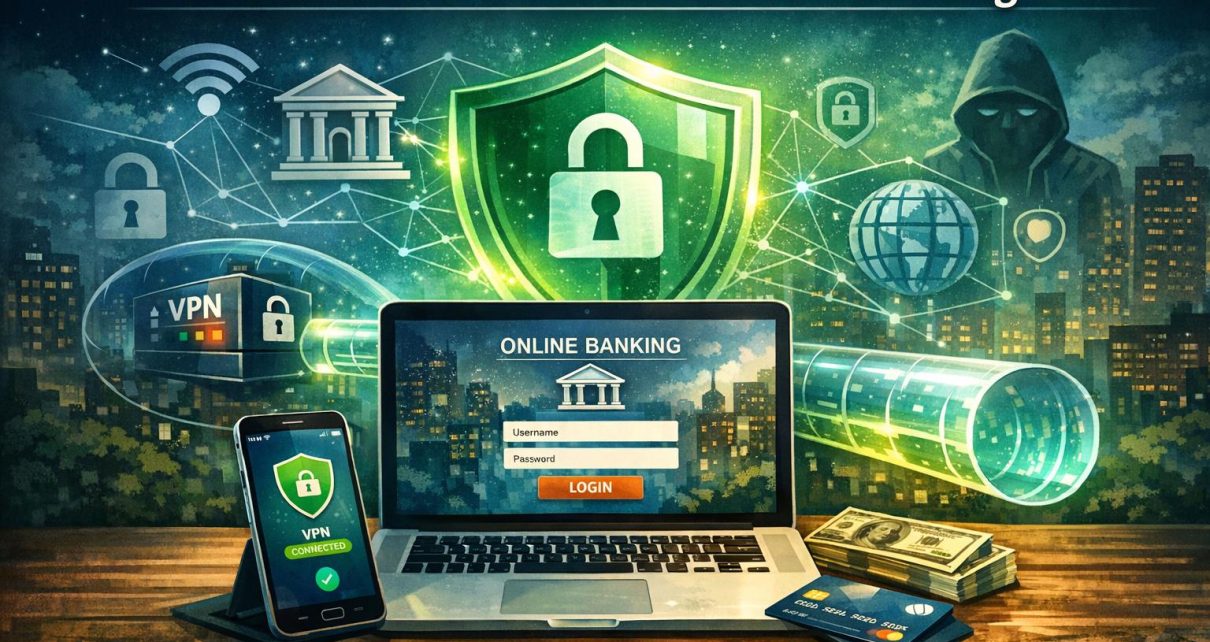
A VPN establishes a protected pathway—often described as a “tunnel”—between the user’s device and the VPN server. This tunnel ensures that any data transmitted is encrypted before leaving the device and remains protected until it reaches its destination. As a result, even if cybercriminals attempt to intercept the data, the encryption prevents them from reading or exploiting it.
In practical terms, when accessing a bank account through a VPN, key data such as usernames, passwords, and session activity are shielded from common threats like packet sniffing or man-in-the-middle attacks. This is particularly important when users access banking services from shared or unfamiliar networks.
Encryption and Privacy
The core feature of a VPN is encryption, which converts readable data into an encoded format. Modern VPN services use robust encryption standards such as AES-256, which is widely considered secure for both commercial and governmental use. This encryption ensures that intercepted data remains inaccessible without the proper decryption key.
In addition to encryption, VPNs contribute to maintaining data confidentiality. Internet service providers, network administrators, and other third parties are less able to monitor browsing patterns when a VPN is active. This added layer of privacy is particularly valuable when conducting financial activities that require discretion.
IP Address Masking
Another key function of a VPN is masking the user’s IP address. Instead of displaying the user’s actual IP address, which can reveal geographic location and device details, the VPN substitutes it with the address of the VPN server. This process reduces the ability of external parties to trace online actions back to a specific user.
For online banking, IP masking can help minimize tracking and profiling. However, it is important to note that banks may use IP location as part of their fraud detection systems. Sudden changes in location may trigger security checks, which is why selecting appropriate server locations is relevant for consistent access.
Choosing the Right VPN for Online Banking
Not all VPN services offer the same level of protection or reliability. Selecting an appropriate VPN requires consideration of technical features, transparency, and provider reputation. Using a poorly designed or untrustworthy VPN may introduce new security concerns rather than resolving existing ones.
Strong Encryption Protocols
A reliable VPN should implement strong and modern encryption protocols. Standards such as AES-256 encryption, combined with secure tunneling protocols like OpenVPN, WireGuard, or IKEv2, provide a solid foundation for protecting sensitive data. Weak or outdated protocols can compromise the effectiveness of a VPN and may leave data exposed.
It is also beneficial to ensure that the VPN includes features such as kill switches, which automatically disconnect internet access if the VPN connection drops. This prevents unencrypted data from being transmitted accidentally during interruptions.
No-Log Policy
A no-log policy refers to the provider’s commitment not to collect or store user activity data. For online banking, this is important because it ensures that sensitive browsing activity is not recorded or potentially exposed. Providers that have undergone independent audits or operate under strict privacy regulations offer a higher level of assurance.
Transparency reports and clear privacy policies can provide insight into how a VPN provider handles user data. Users should review these carefully before selecting a service.
Reliable VPN Provider
The reputation of the VPN provider plays a significant role in its reliability. Established providers with a consistent track record of performance, security updates, and customer support are generally preferable. User reviews, independent evaluations, and long-term presence in the market can help indicate trustworthiness.
Free VPN services, while accessible, often come with trade-offs such as limited security features, data caps, or monetization through user data. For online banking, where security is critical, selecting a reputable paid service is often a more appropriate choice.
Best Practices for Using VPN in Online Banking
While a VPN enhances security, it should be combined with broader safe usage practices. Relying solely on a VPN without considering other aspects of cybersecurity may leave gaps in protection.
Connect to Secure Servers
When accessing online banking platforms, it is advisable to connect to VPN servers located in the same country as the bank. This helps maintain consistent login patterns and reduces the likelihood of triggering automated fraud detection systems. Unusual login locations may prompt additional verification steps or temporary account restrictions.
Stable and high-quality servers also reduce connection drops, ensuring that banking sessions remain uninterrupted and secure.
Keep Software Updated
Regular updates are essential for maintaining security across all devices and applications. VPN software, operating systems, browsers, and banking apps should be kept up to date to address known vulnerabilities. Updates often include security patches that protect against newly discovered threats.
Neglecting updates can undermine the protective benefits of a VPN by exposing devices to exploits that encryption alone cannot mitigate.
Monitor Account Activity
Consistent monitoring of bank account activity remains an important security measure. Even with protective tools in place, users should review transactions regularly to identify any unauthorized activity. Early detection allows for quicker response and minimizes potential losses.
Many banks provide alerts for transactions, login attempts, or changes to account settings. Enabling these notifications adds an additional layer of oversight to financial activities.
Additional Considerations
Although VPNs improve privacy and security, they do not replace other essential safeguards. Features such as multi-factor authentication (MFA), strong password management, and secure devices are equally important. A compromised device, for example, cannot be fully protected by a VPN alone.
It is also important to recognize that banks typically use their own encryption protocols, such as HTTPS with TLS. A VPN adds a layer of protection before data reaches the bank’s servers, but it works in conjunction with existing security systems rather than replacing them.
Users should also be aware of potential performance impacts. VPN connections may slightly reduce internet speed due to encryption processes and server routing. However, high-quality providers minimize this impact to maintain usability during activities such as online banking.
Conclusion
Using a VPN for online banking provides an additional layer of protection by encrypting internet traffic and masking identifying information. These features help reduce exposure to common cyber threats, particularly when accessing banking services over unsecured networks. However, the effectiveness of a VPN depends on choosing a reputable provider, using strong security settings, and combining it with broader cybersecurity practices.
When integrated into a comprehensive approach that includes secure devices, updated software, and vigilant monitoring, a VPN can contribute to a more controlled and secure online banking experience.