Introduction to VPNs and ISP Tracking
Internet Service Providers (ISPs) are essential intermediaries that facilitate access to the internet by routing data between users and online services. Every action performed online—loading a webpage, streaming content, or sending a message—passes through an ISP’s infrastructure. Because of this central position, ISPs have technical visibility into user activity. This visibility often includes metadata such as the domains accessed, timestamps of activity, data volume, and the approximate location of the user. In some cases, depending on the protocol and encryption used, more detailed insights may also be inferred.
This capability has led to increased awareness around digital privacy. Users who prefer to limit how much of their online behavior is observable often seek tools that reduce this exposure. One widely adopted solution is the Virtual Private Network (VPN), which modifies how traffic is transmitted and how identity markers such as IP addresses are presented.
Understanding How Tracking Works
ISPs rely on several mechanisms to monitor and log user activity. At the most basic level, every internet connection is associated with an IP address assigned by the ISP. This identifier allows traffic to be routed correctly, but it also links activity back to a specific subscriber account. When a user accesses a website, the request passes through the ISP, which can log the destination domain and the time of access.
Modern web traffic often uses encryption protocols such as HTTPS, which prevent ISPs from seeing the exact content of communications. However, even with encryption, certain metadata remains visible. For example, the domain name (via DNS queries) and connection timing can still be observed unless additional protective measures are used. ISPs may store this metadata for network management, regulatory compliance, or business purposes.
In some jurisdictions, ISPs are required to retain connection logs for a defined period. In others, data collection practices vary depending on company policy. Aggregated or anonymized data may be shared with third parties for analytics or advertising. While identifiers may be removed, patterns in behavior can still provide useful insights.
The Role of VPNs
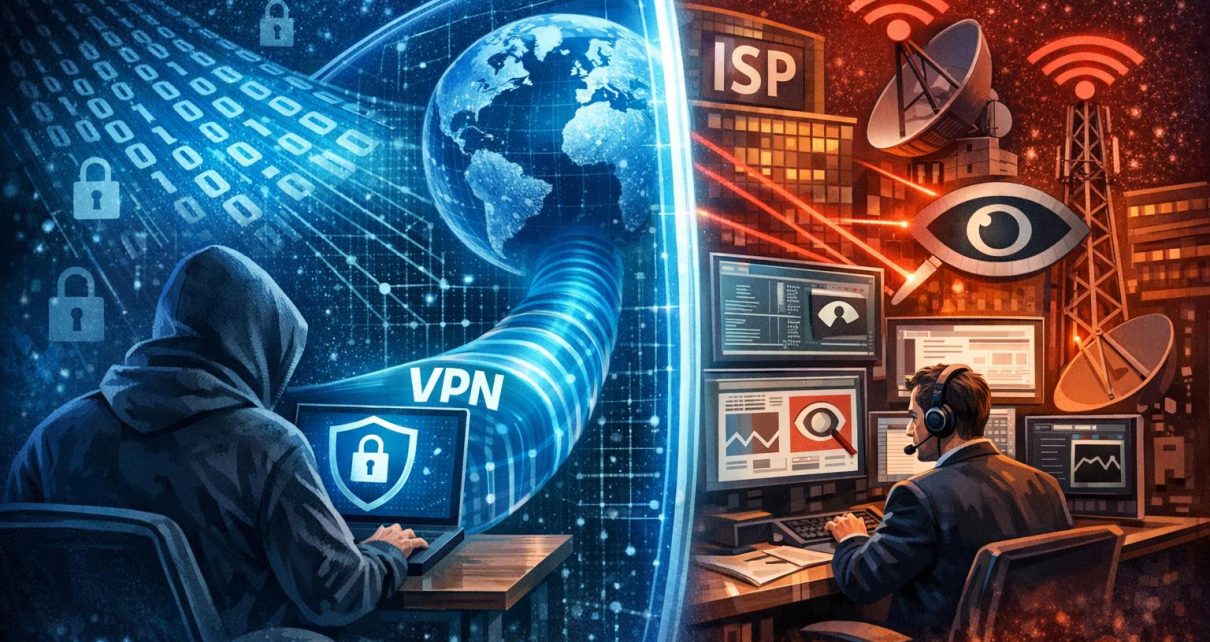
A VPN changes the path that internet traffic follows. Instead of connecting directly to a website, a user first establishes a secure tunnel to a VPN server. All subsequent traffic is routed through this server before reaching its final destination. As a result, the ISP sees only an encrypted connection between the user and the VPN server, rather than the full range of websites being visited.
This shift in routing has two main effects. First, it reduces the ISP’s visibility into browsing activity. Second, it transfers a degree of trust from the ISP to the VPN provider, since the provider now handles the traffic after it leaves the encrypted tunnel.
VPNs operate using a variety of protocols, such as OpenVPN, WireGuard, or IPsec. These protocols determine how data is encrypted and transmitted. While the technical implementation differs, the goal remains consistent: to create a secure and private communication channel over a public network.
Encryption and Data Protection
Encryption is a central feature of VPN technology. When a user connects to a VPN, data packets are wrapped in layers of encryption before being transmitted. This process ensures that even if the data is intercepted during transit, it cannot be interpreted without the appropriate decryption keys.
From the ISP’s perspective, encrypted VPN traffic appears as unreadable data flowing to a single external server. The ISP cannot easily determine whether the user is browsing websites, accessing cloud services, or streaming media. This significantly limits the level of monitoring that can be performed.
However, encryption does not make all forms of observation impossible. ISPs can still detect that a VPN is being used, based on traffic patterns and the destination server. Additionally, they can measure connection duration and data volume. While this information is less revealing than direct browsing logs, it still provides a general profile of usage.
IP Address Obfuscation
Another key function of a VPN is the replacement of the user’s original IP address with one assigned by the VPN server. When traffic exits the VPN tunnel and reaches its destination, it carries the VPN server’s IP address instead of the user’s own. This process, often referred to as IP masking or obfuscation, separates the user’s identity from their online actions.
This mechanism has practical implications. Websites and online services that log visitor IP addresses will associate activity with the VPN server rather than the individual user. For ISPs, this means that while they know a user is connected to a VPN, they cannot directly link that user to specific external services accessed through the tunnel.
It is important to note that IP obfuscation does not provide complete anonymity. Other identifiers, such as account logins, browser configurations, and device characteristics, may still reveal user identity if not managed carefully.
Challenges and Considerations
Although VPNs enhance privacy, their effectiveness depends on several factors. One of the most significant considerations is the trustworthiness of the VPN provider. Since the provider processes user traffic after it passes through the encrypted tunnel, it has the technical ability to log or monitor activity. Many providers advertise no-logs policies, but the accuracy of these claims varies. Independent audits and transparent privacy policies can provide additional assurance.
Performance is another factor. Routing traffic through a VPN server introduces additional latency and may reduce connection speeds. The extent of this impact depends on server location, network congestion, and the chosen protocol. Users often select servers geographically close to minimize delays.
There are also compatibility considerations. Some websites and services restrict or monitor VPN usage, which can lead to access limitations or additional verification steps. Streaming platforms, for example, may block certain VPN IP ranges to enforce regional licensing agreements.
In addition, VPNs do not address all forms of tracking. Technologies such as cookies, browser fingerprinting, and device-level identifiers operate independently of IP addresses. A VPN does not prevent a website from recognizing a returning user if stored data or unique browser characteristics remain unchanged.
Users should also consider the legal and regulatory environment in their region. In some countries, VPN usage is restricted or subject to specific rules. Understanding these constraints helps ensure compliance while using privacy tools.
Conclusion
VPNs provide a structured method for reducing ISP visibility into online activity by combining encryption and IP address masking. They alter how data is transmitted and how user identity is represented, limiting the amount of information accessible to intermediaries such as ISPs. While not a complete solution for all forms of online tracking, they represent a significant improvement over unprotected connections.
Effective use of a VPN requires attention to provider policies, technical configuration, and complementary privacy practices. When applied thoughtfully, a VPN can form part of a broader approach to managing digital exposure and maintaining a more controlled online presence.