Introduction to VPNs and Censorship
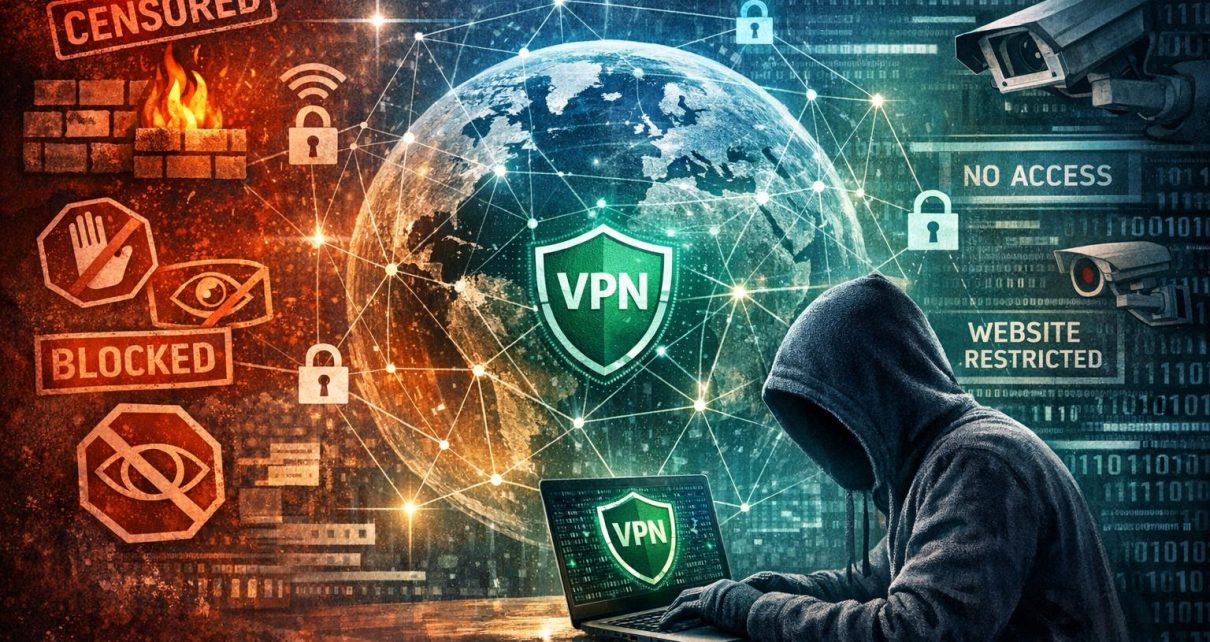
Virtual Private Networks (VPNs) have become widely used tools for managing privacy, securing communications, and accessing information across borders. In environments where internet usage is monitored or restricted, VPNs serve an additional function by enabling users to reach content that would otherwise be unavailable. Censorship can take many forms, including blocking websites, limiting access to foreign media platforms, or filtering specific keywords. In such contexts, VPNs offer a technical method to bypass these controls by redirecting network traffic through external servers.
The role of VPNs in bypassing censorship has grown alongside increasing global reliance on digital communication. Governments, institutions, and network administrators may impose restrictions for various reasons, including political stability, regulatory compliance, or content moderation. VPN technology operates independently of these motivations by focusing on how data is transmitted rather than what data is transmitted.
How VPNs Work
A VPN functions by establishing a secure connection between a user’s device and a remote server operated by the VPN provider. This connection is encrypted, meaning that any data sent or received is transformed into a format that cannot easily be read without proper authorization. Once connected, the user’s internet traffic is routed through the VPN server instead of directly through their local internet service provider.
This process effectively replaces the user’s original IP address with the IP address of the VPN server. Since many online services rely on IP addresses to determine geographic location, this substitution creates the appearance that the user is accessing the internet from a different region. As a result, restrictions tied to physical location can often be avoided.
In addition to masking location, VPNs also prevent intermediaries from easily observing browsing behavior. Without a VPN, internet service providers and network administrators can often see which websites a user visits, even if the exact content is encrypted. With a VPN, this visibility is reduced because traffic is encapsulated within an encrypted tunnel.
Circumventing Geographic Restrictions
Geographic restrictions are one of the most common forms of online limitation. These restrictions may block access to news outlets, streaming services, or social media platforms based on the user’s location. VPNs address this by allowing users to select servers in different countries, effectively relocating their digital presence.
For example, a user in a region where certain websites are blocked can connect to a VPN server in a country where those sites are accessible. The website then interprets the connection as originating from that permitted location. This process occurs without requiring changes to the website itself, as the adjustment happens at the network routing level.
However, not all geographic restrictions are equally easy to bypass. Some services actively attempt to detect and block VPN traffic by identifying known server IP ranges or unusual connection patterns. In response, many VPN providers continuously update their infrastructure to maintain access. This dynamic creates an ongoing interaction between restriction mechanisms and circumvention tools.
The Technical Aspect
The effectiveness of a VPN largely depends on the strength of its encryption and the protocols it employs. Common protocols include OpenVPN, L2TP/IPsec, and IKEv2, each offering different balances between security, speed, and reliability. Encryption standards such as AES (Advanced Encryption Standard) are widely used to protect data during transmission.
When a VPN connection is established, data packets are encrypted before leaving the user’s device and decrypted only after reaching the VPN server. This ensures that any entity attempting to intercept the data cannot interpret its contents. The encrypted tunnel also shields metadata, although some connection details may still be observable depending on the setup.
Beyond encryption, DNS handling is another important aspect. Some VPNs route Domain Name System (DNS) queries through their secure servers, preventing local networks from seeing which domain names are being requested. Without this protection, even encrypted browsing sessions might reveal certain patterns of activity.
Performance considerations also play a role. Encryption and rerouting introduce additional processing and latency, which can affect connection speeds. High-quality VPN services attempt to minimize this impact through optimized servers and efficient protocols. Users may notice differences in speed depending on server distance, network congestion, and the chosen configuration.
Concerns and Legal Implications
While VPNs provide technical advantages, their use is subject to legal and regulatory frameworks that vary by country. Some governments permit VPN usage without restriction, while others regulate or prohibit it entirely. In highly controlled environments, unauthorized use of VPNs can lead to penalties or service disruptions.
It is important for users to understand that using a VPN does not remove legal responsibilities. Accessing restricted content may still be considered a violation of local laws, even if the technical barrier is bypassed. Awareness of applicable regulations is therefore an essential part of responsible VPN usage.
Another concern is the reliability of VPN providers. Not all services offer the same level of privacy protection. Some providers may log user activity, retain connection records, or operate under jurisdictions with extensive data-sharing requirements. A no-logs policy is often cited as a key feature, but its credibility depends on independent verification and the provider’s transparency.
Users should also consider potential security risks associated with low-quality or free VPN services. These services may lack strong encryption, inject advertisements, or collect user data for commercial purposes. In some cases, they may even compromise rather than enhance privacy. Evaluating a provider’s technical standards, business model, and reputation is a necessary step before relying on a VPN for sensitive activities.
Additionally, VPN usage does not guarantee complete anonymity. Other tracking methods, such as browser fingerprinting, cookies, or account-based identification, can still associate activity with a specific user. A VPN should therefore be viewed as one component of a broader privacy strategy rather than a comprehensive solution.
Conclusion
VPNs represent a practical tool for navigating a digital environment where access to information is not always uniform. By encrypting data and redirecting traffic through remote servers, they allow users to bypass many forms of censorship and geographic restriction. Their operation is grounded in well-established networking and encryption principles, which provide both flexibility and security when implemented correctly.
At the same time, the use of VPNs involves trade-offs and responsibilities. Legal considerations, provider trustworthiness, and technical limitations all influence their effectiveness. Understanding these factors enables users to make informed decisions about how and when to use VPN technology. In contexts where access and privacy are constrained, VPNs offer a method of extending reach, but they do not eliminate the broader complexities associated with digital governance and regulation.