The Role of VPNs in Enhancing Online Security
Virtual Private Networks (VPNs) have increasingly become a critical component of modern digital security practices. As internet usage expands across personal, professional, and public environments, the exposure to cyber threats has grown in parallel. Attackers employ a wide range of techniques, including data interception, identity tracking, and network exploitation, to gain unauthorized access to information. Within this context, VPNs serve as a protective layer that helps reduce vulnerability during online activity.
Rather than functioning as a complete security solution, a VPN operates as one element within a broader cybersecurity strategy. Its primary contribution lies in strengthening the confidentiality and integrity of data transmitted across networks. By understanding how VPNs function and where their benefits apply, users can make more informed and practical decisions about safeguarding their digital presence.
What is a VPN?
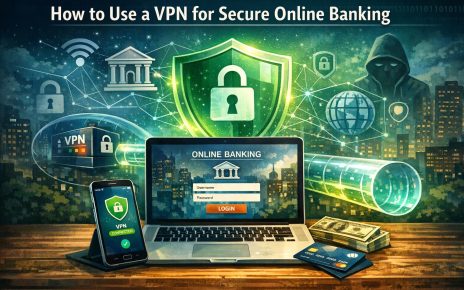
A Virtual Private Network is a service that establishes a secure connection between a user’s device and a remote server operated by the VPN provider. This connection is created through a process known as tunneling, where data is encapsulated and transmitted in an encrypted format. The encryption ensures that even if the data is intercepted during transmission, it remains unreadable without the appropriate decryption key.
When a VPN is active, all internet traffic is routed through the VPN server before reaching its final destination. This process effectively masks the user’s original network identity and replaces it with the server’s identity. As a result, external observers, including internet service providers, potential attackers, and websites, see the VPN server as the source of the traffic rather than the user’s device.
The practical implication of this setup is that it introduces both privacy and security advantages. It reduces direct exposure to network-level threats and limits the amount of identifiable information shared during routine online interactions.
How VPNs Protect Against Hackers
Encryption of Data plays a central role in the protective capabilities of a VPN. When data such as login credentials, financial details, or private messages is transmitted without encryption, it can potentially be captured through techniques like packet sniffing. VPN encryption transforms this data into an encoded format that cannot be easily interpreted. Modern VPN services typically use advanced encryption standards that are computationally difficult to break, thereby significantly reducing the risk of unauthorized access during transmission.
Masking IP Address is another important mechanism through which VPNs enhance security. Every device connected to the internet is assigned an IP address, which can reveal approximate geographic location and network details. By substituting the user’s real IP address with that of the VPN server, the VPN minimizes traceability. This makes it more difficult for malicious actors to target a specific user or correlate online activity with a physical identity. While this does not guarantee complete anonymity, it introduces an additional barrier that complicates tracking efforts.
Secure Public Wi-Fi Access addresses a common vulnerability in everyday internet use. Public networks, such as those found in airports, cafes, and hotels, often lack strong security configurations. These networks can be exploited by attackers to intercept data or inject malicious content. When a VPN is used on such networks, the encrypted tunnel prevents unauthorized parties from accessing the transmitted data. This is particularly relevant for activities that involve sensitive information, such as accessing financial accounts or corporate systems.
Beyond these core functions, VPNs may also reduce exposure to certain types of automated attacks. For example, by concealing the user’s true network origin, VPNs can limit the effectiveness of direct probing or targeting attempts that rely on IP-based identification. However, this protection is indirect and should not be relied upon as a substitute for proper system security measures.
Choosing the Right VPN
Selecting an appropriate VPN service requires attention to several technical and policy-related factors. One of the most important considerations is the strength and reliability of encryption protocols. Protocols such as OpenVPN, IKEv2/IPSec, and newer implementations like WireGuard are commonly used due to their balance of security and performance. The choice of protocol can affect both the level of protection and the speed of the connection.
Another critical factor is the provider’s logging policy. A VPN service that retains detailed records of user activity may undermine the privacy benefits it is intended to provide. Services that implement a clearly defined no-logs policy reduce the amount of stored data that could potentially be accessed by third parties. However, users should be aware that not all claims are equally verifiable, and transparency reports or independent audits can provide additional assurance.
The availability of server locations also plays a role in usability and performance. A broader distribution of servers allows users to select endpoints that are geographically closer, which can improve connection speeds and reduce latency. Additionally, access to multiple regions can be useful in scenarios where content or services are restricted based on location, although this function is secondary to security considerations.
It is also relevant to consider factors such as connection stability, compatibility with different devices, and the provider’s approach to updates and vulnerability management. A VPN that is not regularly maintained may introduce new risks rather than mitigating existing ones.
Conclusion
VPNs contribute to online security by providing encrypted communication channels, masking identifying information, and reducing risks associated with unsecured networks. These functions address several common attack vectors and improve the baseline level of protection for both individual users and organizations. However, VPNs are not designed to prevent all forms of cyber threats. They do not replace antivirus software, secure authentication practices, or user awareness.
A balanced approach to cybersecurity involves combining multiple layers of protection. Within this layered model, a VPN serves as a practical and often accessible tool that strengthens privacy and reduces exposure during everyday internet use. As digital environments continue to evolve, the role of VPNs is likely to remain relevant, particularly in situations where network trust cannot be assumed.